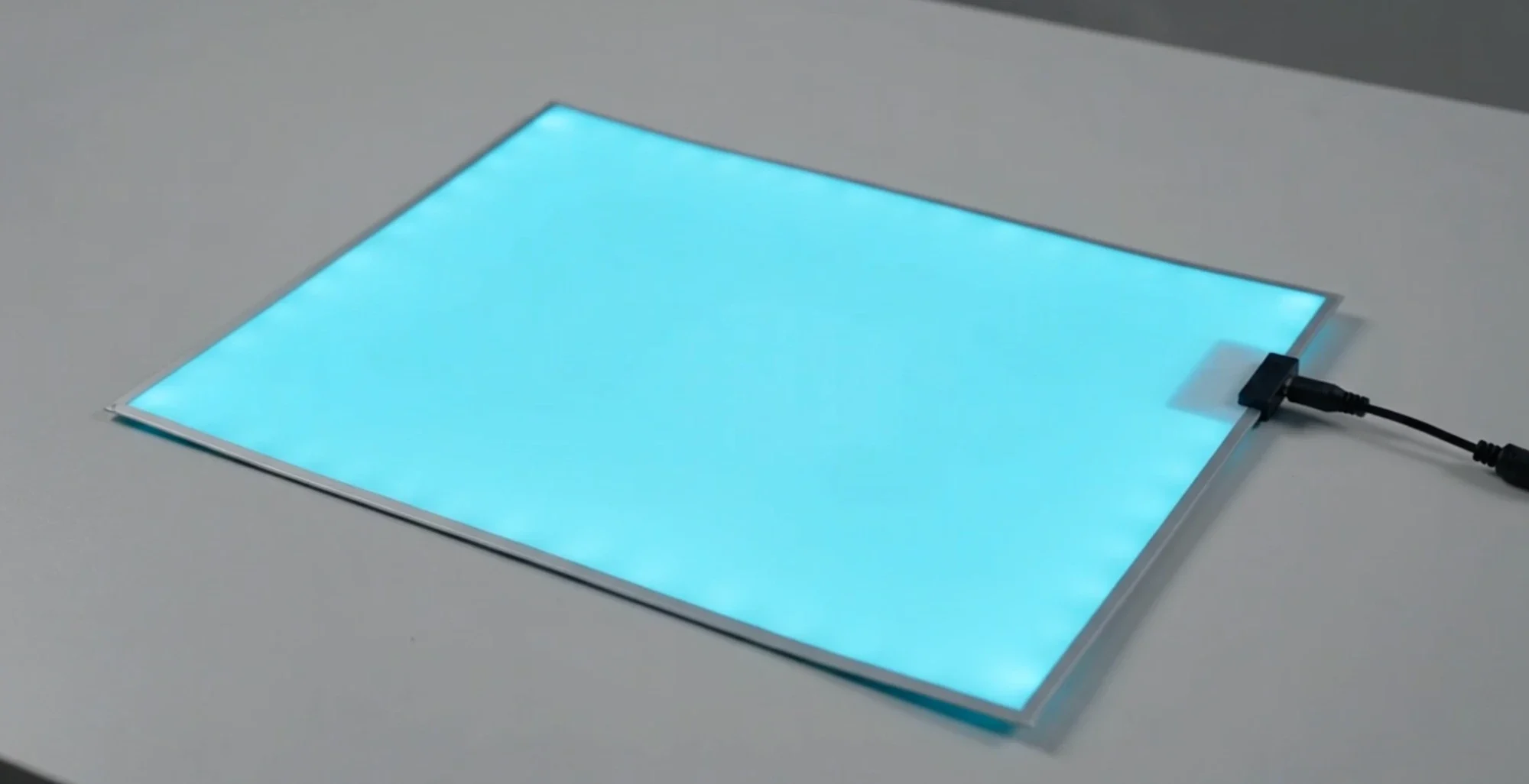
We often say “we print light”. It isn’t a slogan. It’s literally how we make them. EL panels are made with screen printing, one functional layer at a time, in a clean, controlled environment.
Step through the process below.
- Step 1 of 7
Artwork
Every panel starts as a design. Shapes, logos, patterns and connection points are prepared as print-ready files for each layer.
- Step 2 of 7
Screen preparation
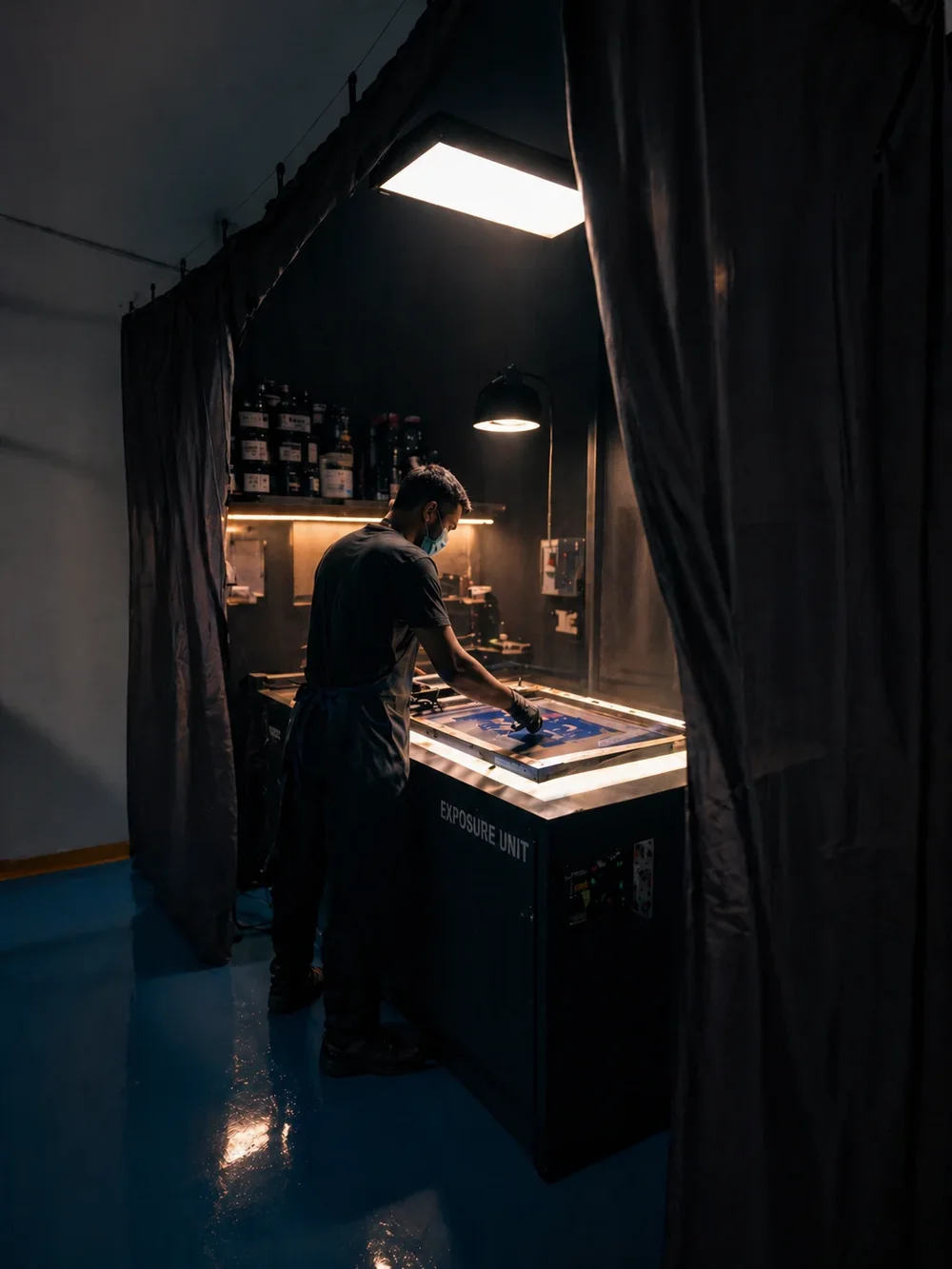
Fine mesh screens are coated with light-sensitive emulsion and exposed under UV in an exposure unit. Light hardens the emulsion everywhere except the artwork.
- Step 3 of 7
Washing
In the washing booth, the unhardened emulsion is rinsed away, leaving open mesh in exactly the shape to be printed.
- Step 4 of 7
Printing the layers
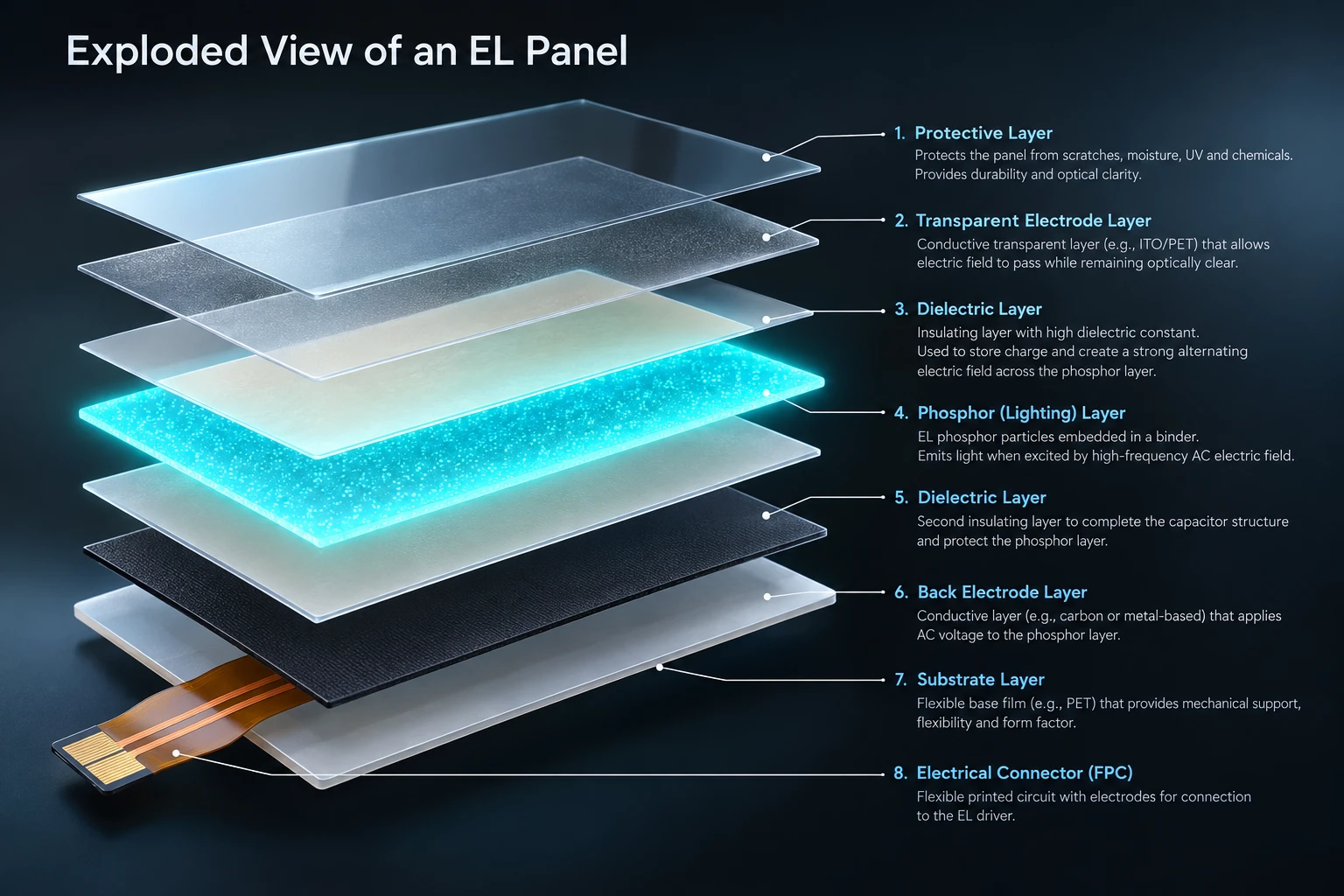
Functional inks are pushed through the screen onto a transparent conductive film: phosphor, dielectric, back electrode and conductive bus bars, one layer at a time.
- Step 5 of 7
Curing
Each layer is dried and cured before the next goes on, so thickness and adhesion stay consistent.
- Step 6 of 7
Lamination & connection
The printed stack is sealed between protective films and fitted with a flexible connector.
- Step 7 of 7
Testing
Every panel is powered up and checked for brightness, uniformity and current before it ships.
Why screen printing?
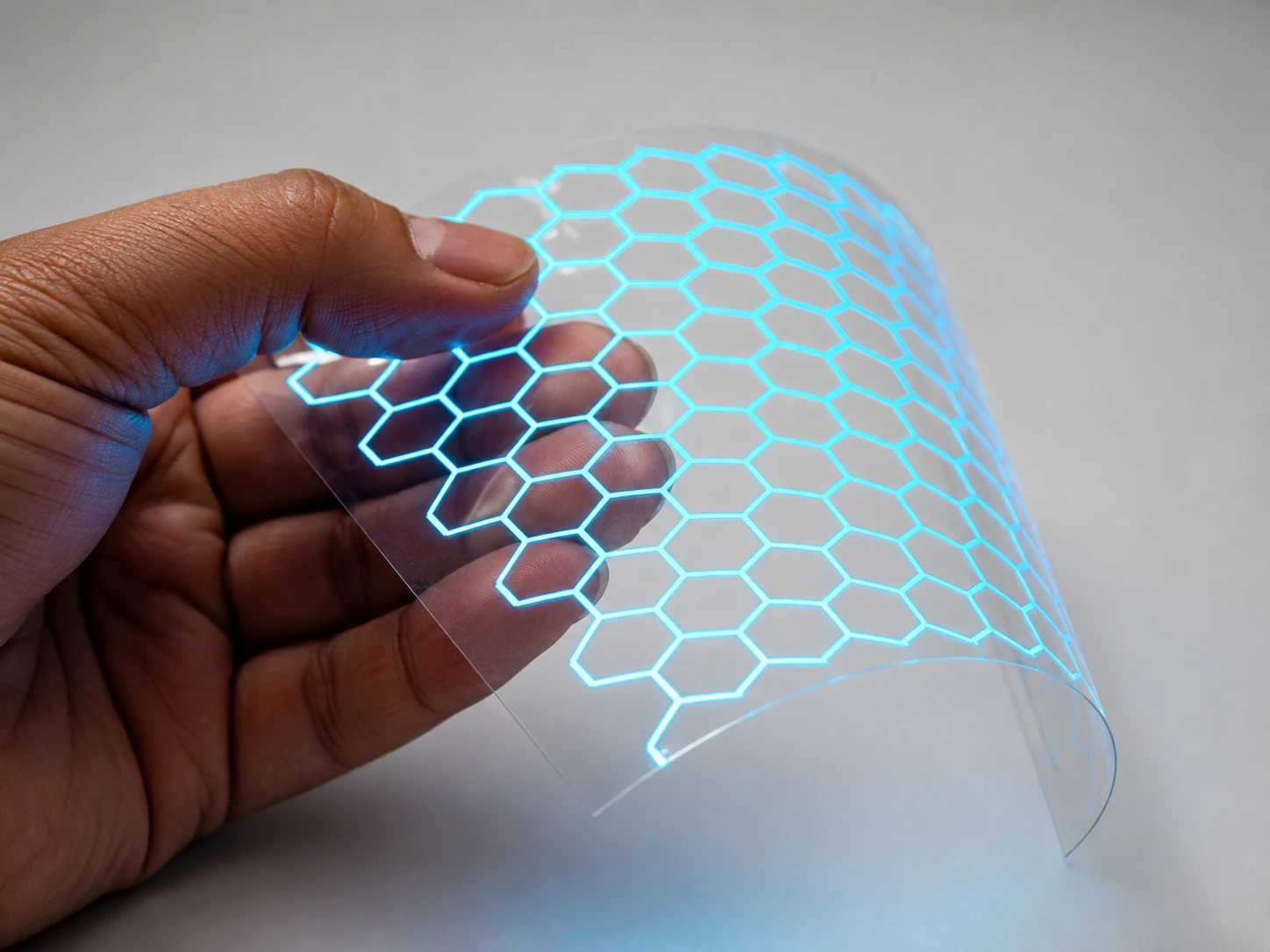
Screen printing lets us deposit thick, even layers of functional inks (phosphors, dielectrics and conductive pastes) onto flexible films. It scales from a single prototype to thousands of panels, and it makes custom shapes easy: change the artwork, and the light changes with it.
Precision is the product
Every stage is controlled: humidity and temperature in the print room, mesh tension and emulsion thickness on the screens, curing times between layers. A speck of dust can become a dark spot; a misaligned layer can short a panel. That is why our facility includes dedicated washing booths, exposure units and quality checks at every step, and why each panel is tested for brightness and uniformity before it leaves.
Change the artwork, and the light changes with it. That is the freedom of printed light.