“Why not just use LEDs?” is one of the first questions we hear. It is a fair one. LEDs are brilliant at what they do. So is OLED. EL is simply different, and the best results come from choosing the right tool for the job.
The short version
- LED: extremely bright and efficient point sources. Ideal for task lighting and illumination at a distance. Needs diffusers to look even, and heat management at higher power.
- OLED: thin, uniform surface light with excellent colour, used mostly in displays. Premium, and sensitive to moisture without strong encapsulation.
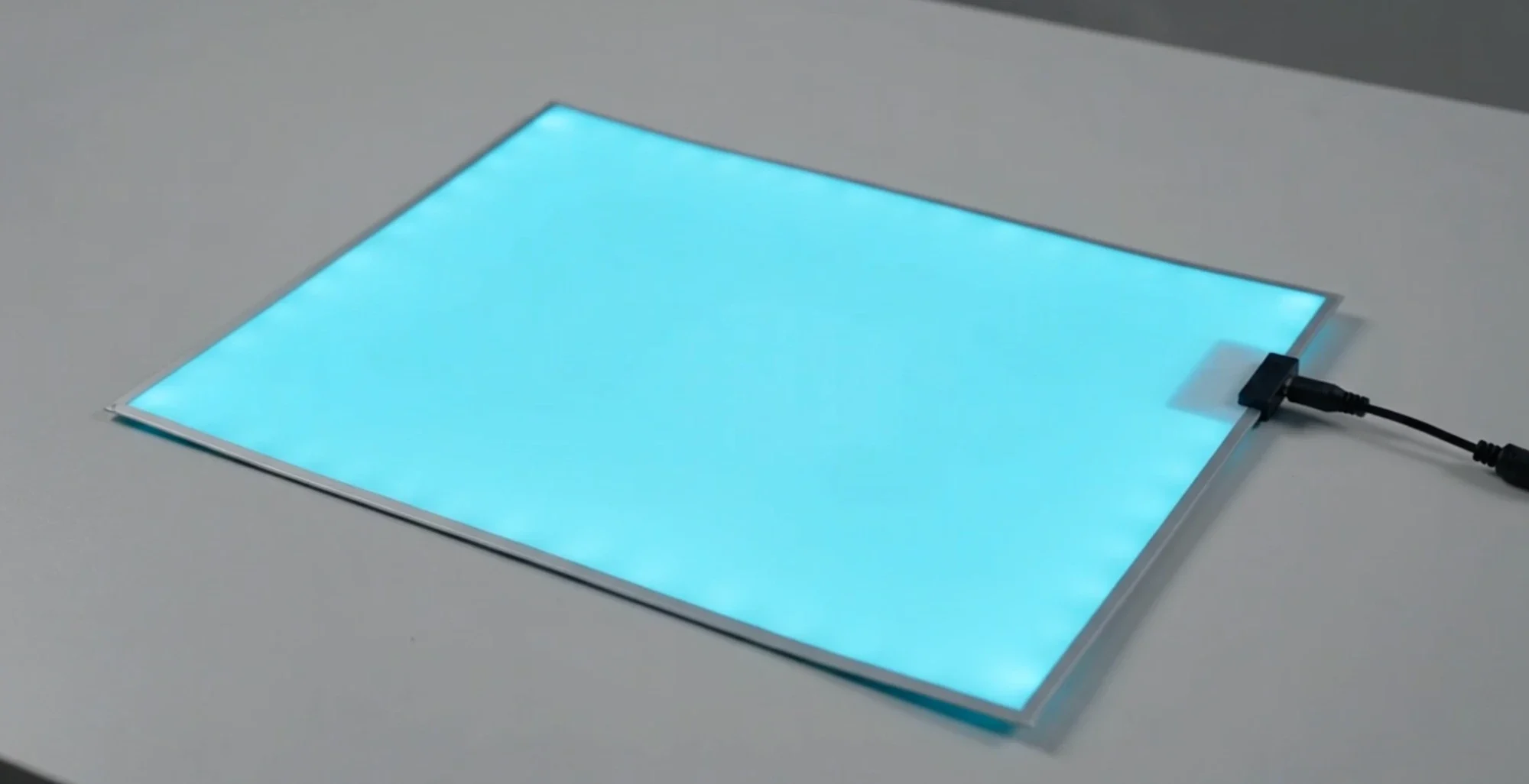
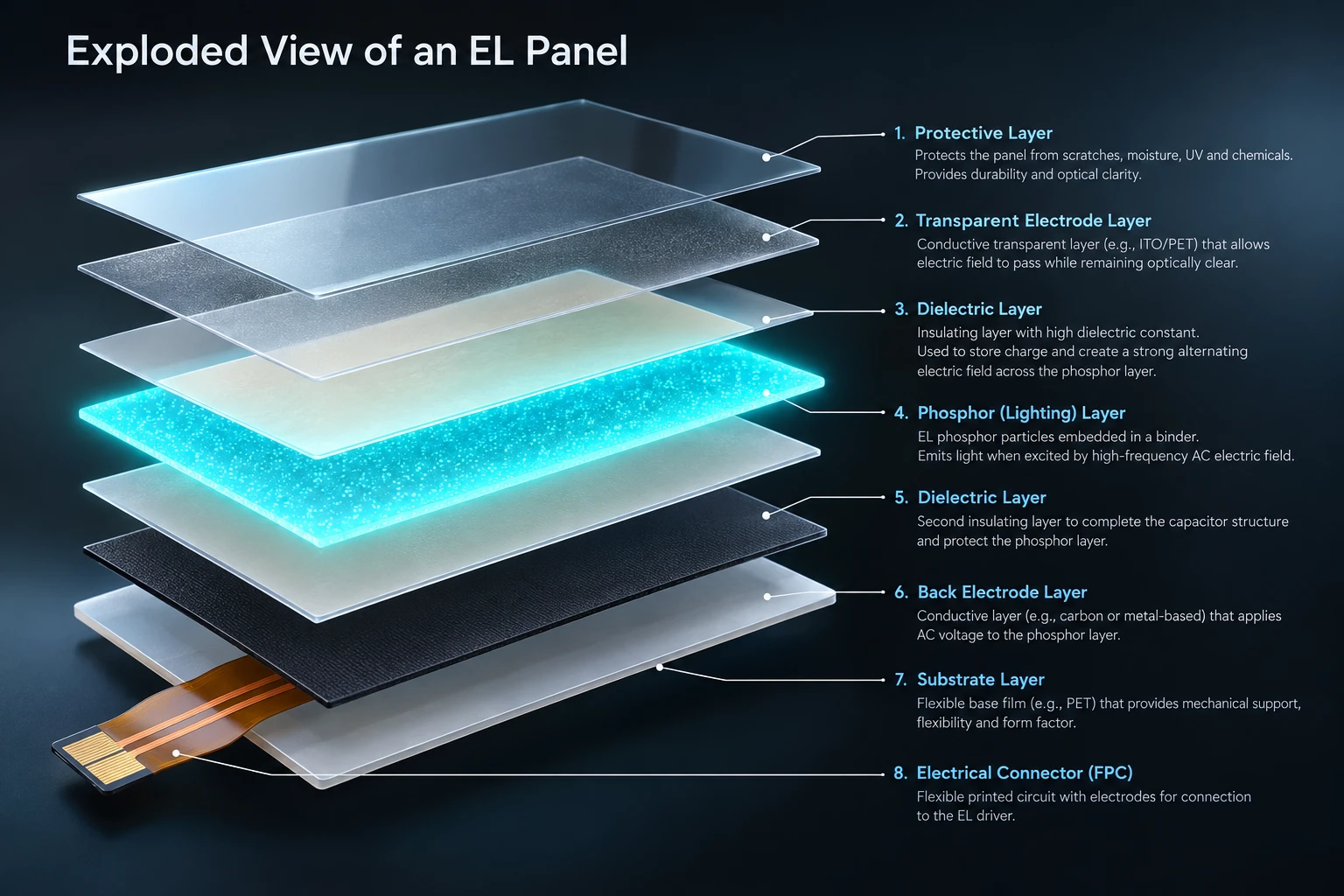
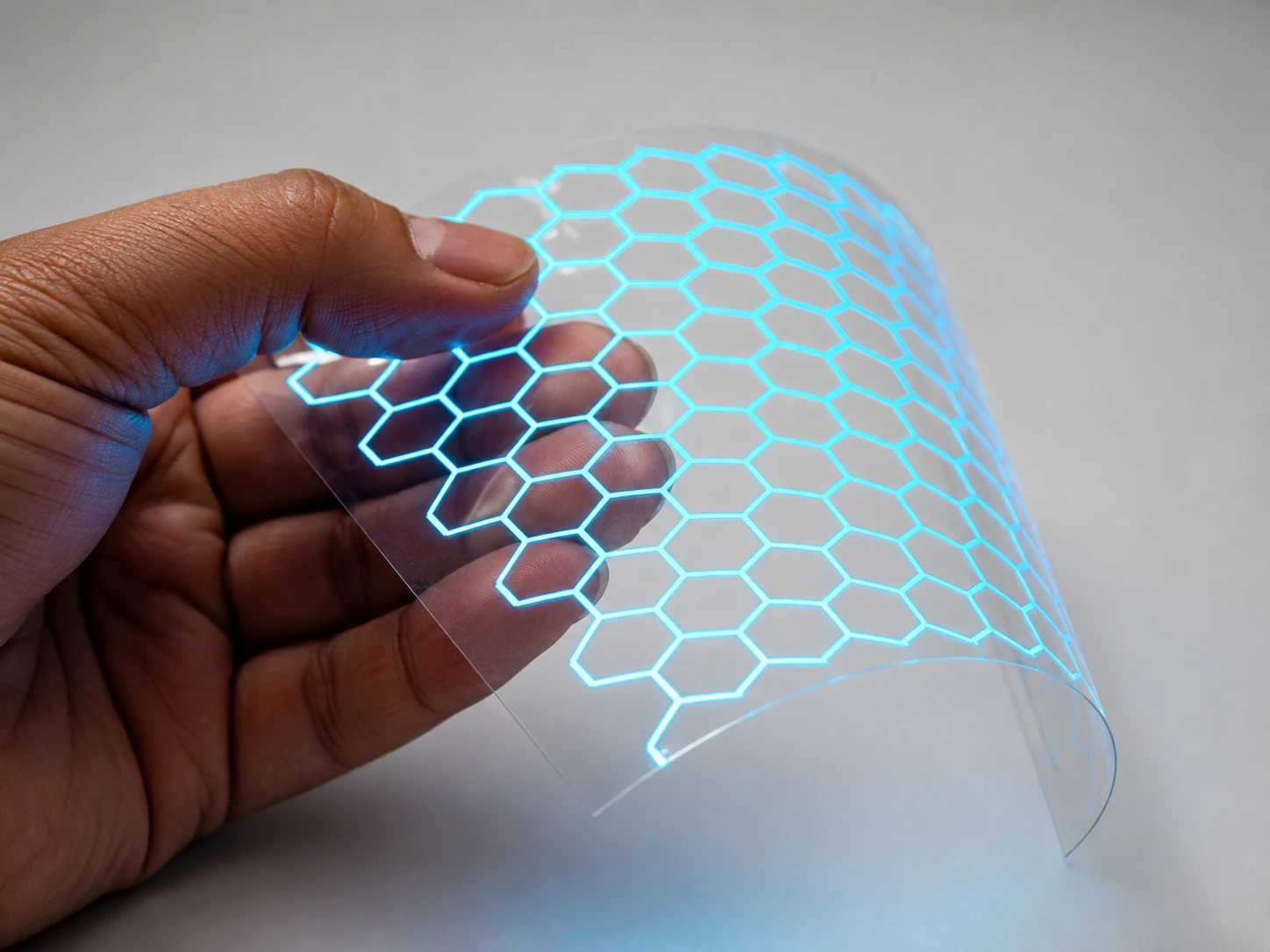
- EL: ultra-thin, flexible, uniform and cool. Lower brightness than LED, so it shines as ambient, accent, signage and decorative light, and in places nothing else fits.
Pick a quality below to see how the three compare.
ELFrom 0.07 mm, a printed film
OLEDVery thin, often on glass or film
LEDNeeds housings, diffusers and depth
ELSoft, ideal for ambient, accent and signage
OLEDGood surface brightness
LEDExtremely bright
ELOne even glow, edge to edge
OLEDExcellent uniformity
LEDPoint sources that need diffusing
ELClose to room temperature
OLEDRuns cool
LEDWarm at the chip; heat sinks at high power
ELBends, curves and cuts to shape
OLEDFlexible versions are specialised
LEDMostly rigid strips and modules
ELCustom shapes by changing the print
OLEDPremium and tooling-heavy
LEDAffordable, but shapes need assembly
A qualitative guide, not a lab benchmark.
Where EL wins
When light has to be the surface, like a glowing logo on fabric, a backlit control panel, a curved car trim or a sign that must stay visible in smoke, EL’s thinness, flexibility and even glow are hard to beat. When you need to light up a whole room, LEDs are usually the better choice. We will always tell you which one fits.