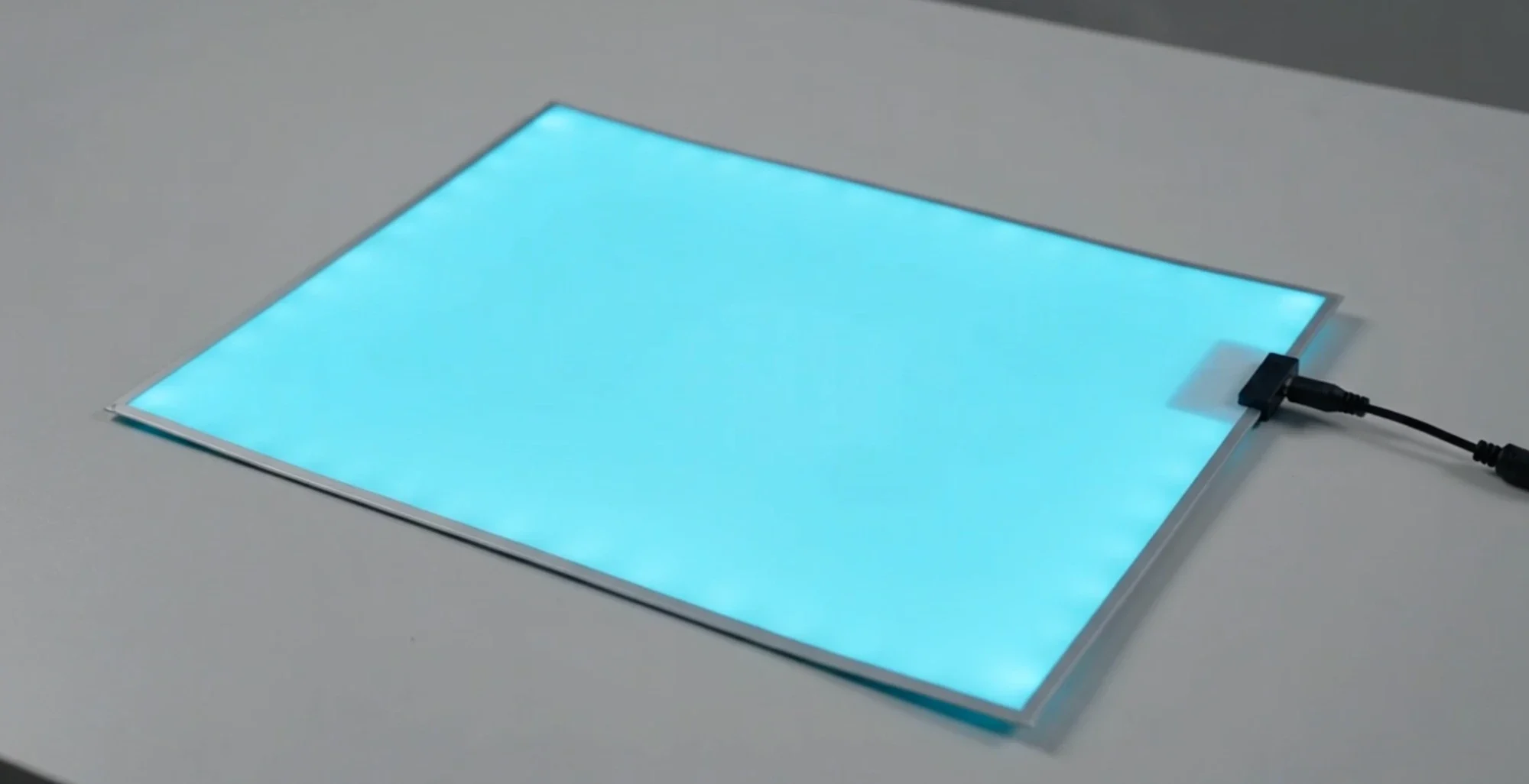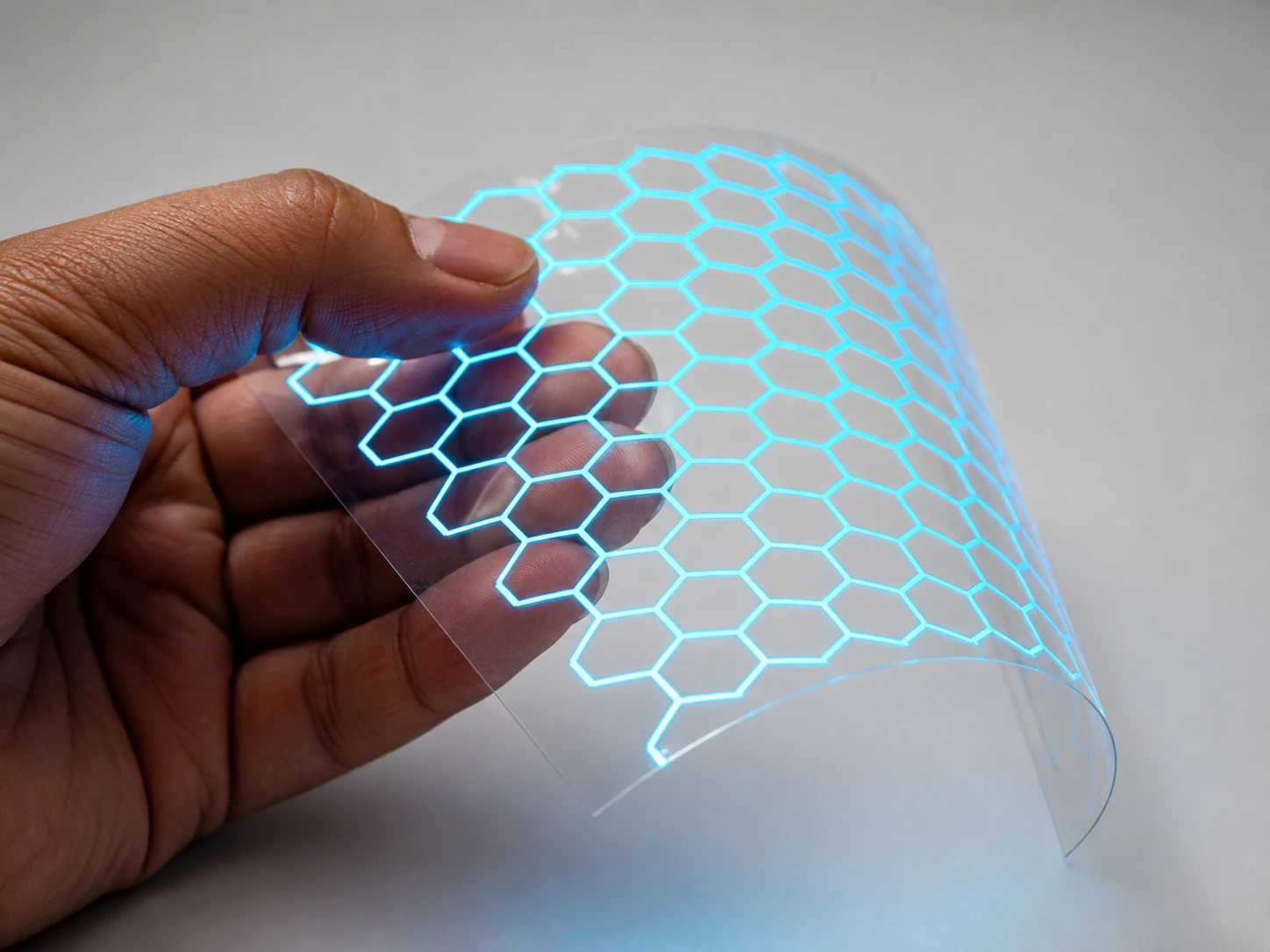
Hold a STYELIGHTS™ panel and it feels like a sheet of plastic film. In fact it is a precisely printed stack of layers, together as thin as 0.07 mm, or seventy microns.
A capacitor that glows
Electrically, an EL panel behaves like a capacitor: two conductive plates separated by insulating material. The difference is that one of the insulating layers is full of phosphor. When the AC field builds up between the plates, the phosphor lights up.
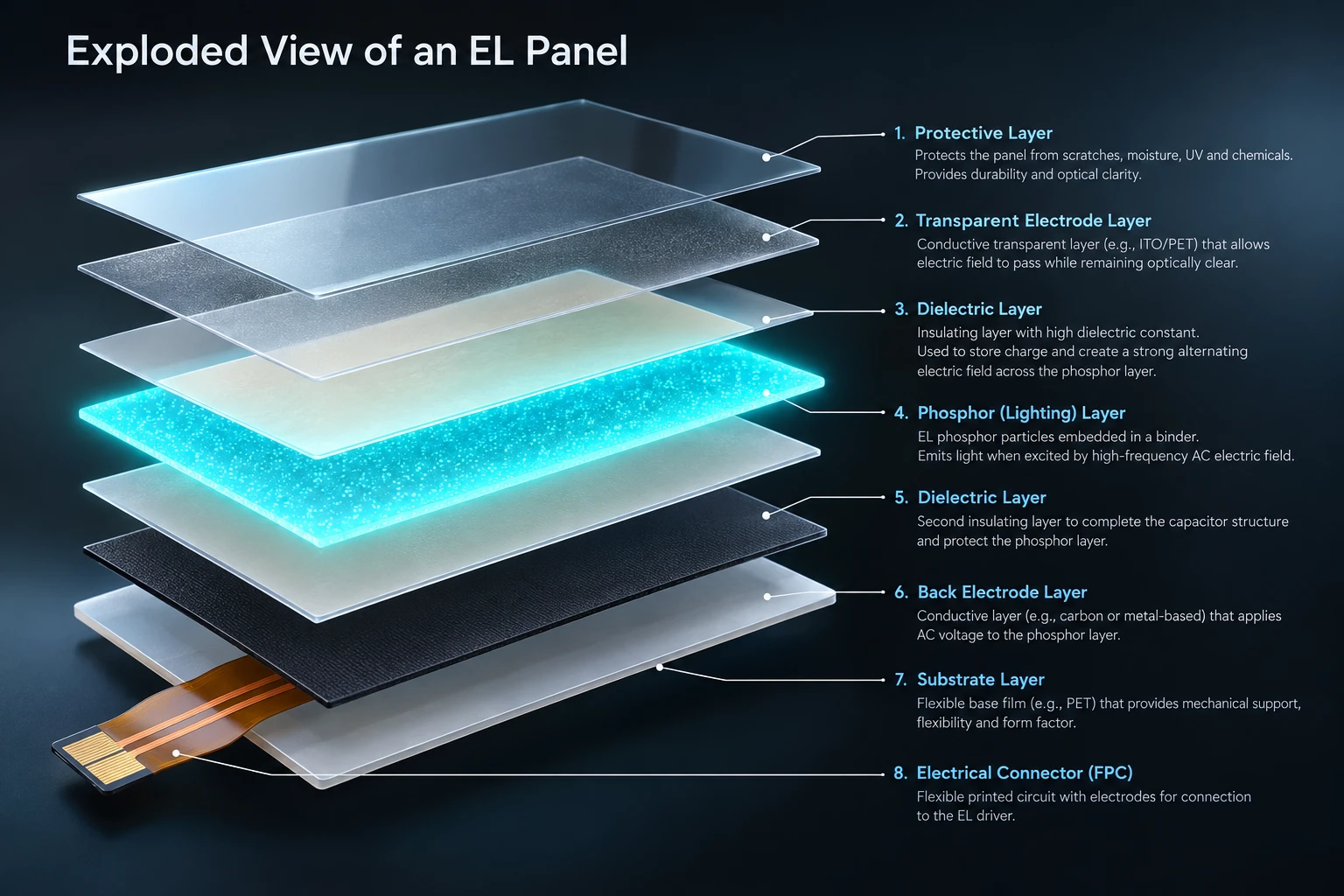
Explore each layer below, from the protective top film down to the flexible connector that links the panel to its driver.
Shields the panel from scratches, moisture, UV and chemicals.
A clear conductive film (such as ITO on PET) that lets light out.
Insulates and builds a strong alternating field across the phosphor.
Phosphor particles in a binder. This is the layer that glows.
A second insulator that completes the capacitor structure.
A conductive layer, carbon- or metal-based, that applies the AC voltage.
A flexible base film that gives the panel strength and shape.
A flexible printed circuit that links the panel to its driver.
Why every micron matters
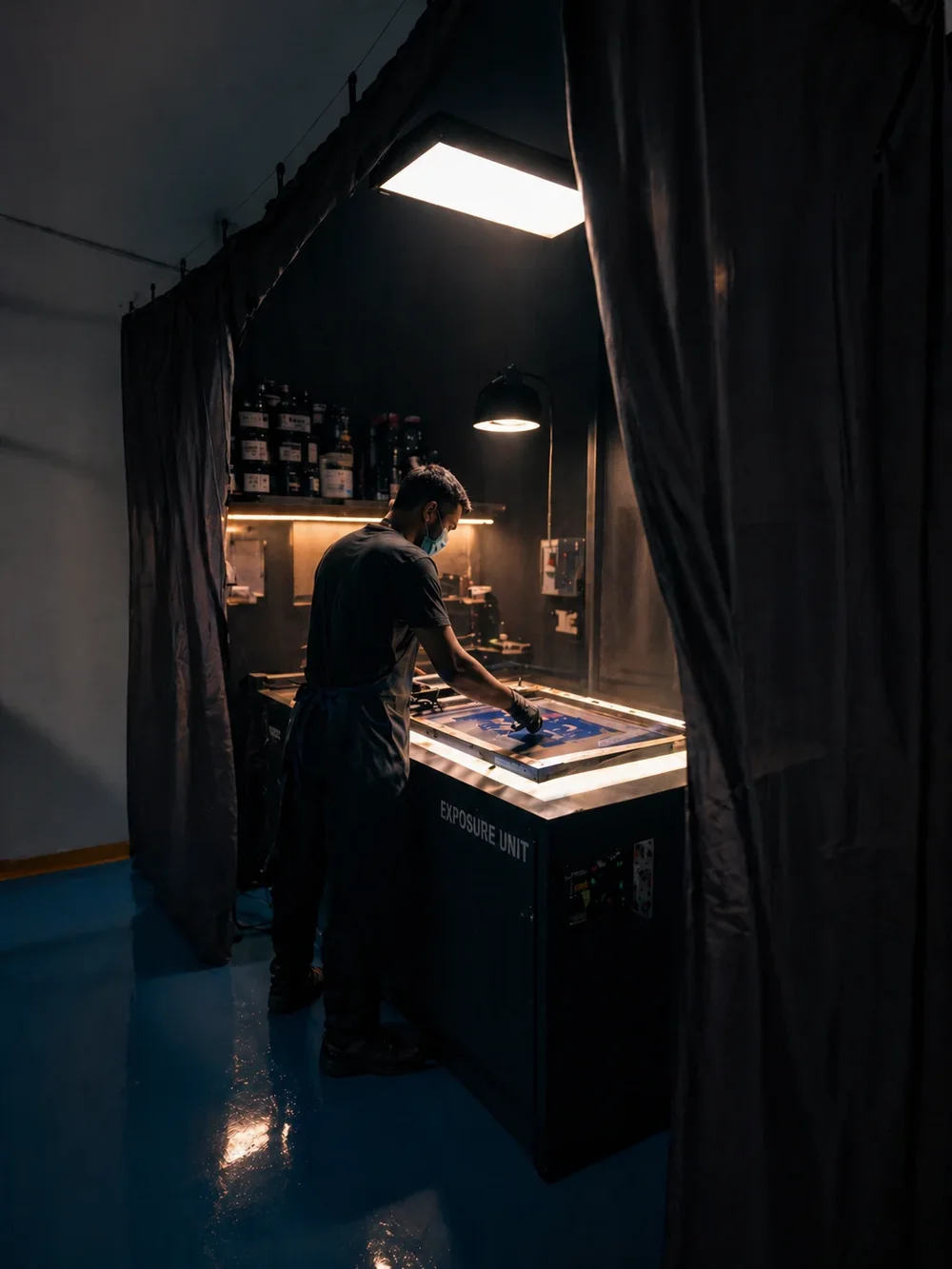
Each layer has a job. The transparent electrode must conduct electricity while letting light out. The dielectric layers must insulate perfectly, because a single pinhole can short the panel. The phosphor layer must be even, or the glow will be patchy. That is why EL manufacturing is a game of precision: consistent thickness, clean registration and careful curing at every step.
Thin is not a compromise. It is what lets light bend, stitch and laminate into places it has never been.
Want to see the panel come apart in 3D? Try the interactive exploded view on our Technology page.