Most light we use is made by heating something up. A filament glows because it is hot; even an LED gives off heat at its tiny junction. Electroluminescence, or EL, is different. It is light produced by a material when an electric field passes through it, not when it gets hot.
A discovery from 1936
The French physicist Georges Destriau first observed electroluminescence in 1936, in zinc sulfide powder suspended in oil. Nearly a century later, the same family of materials still sits at the heart of the EL panels we print today: zinc sulfide phosphors, carefully “doped” with tiny amounts of elements such as copper.
What happens inside
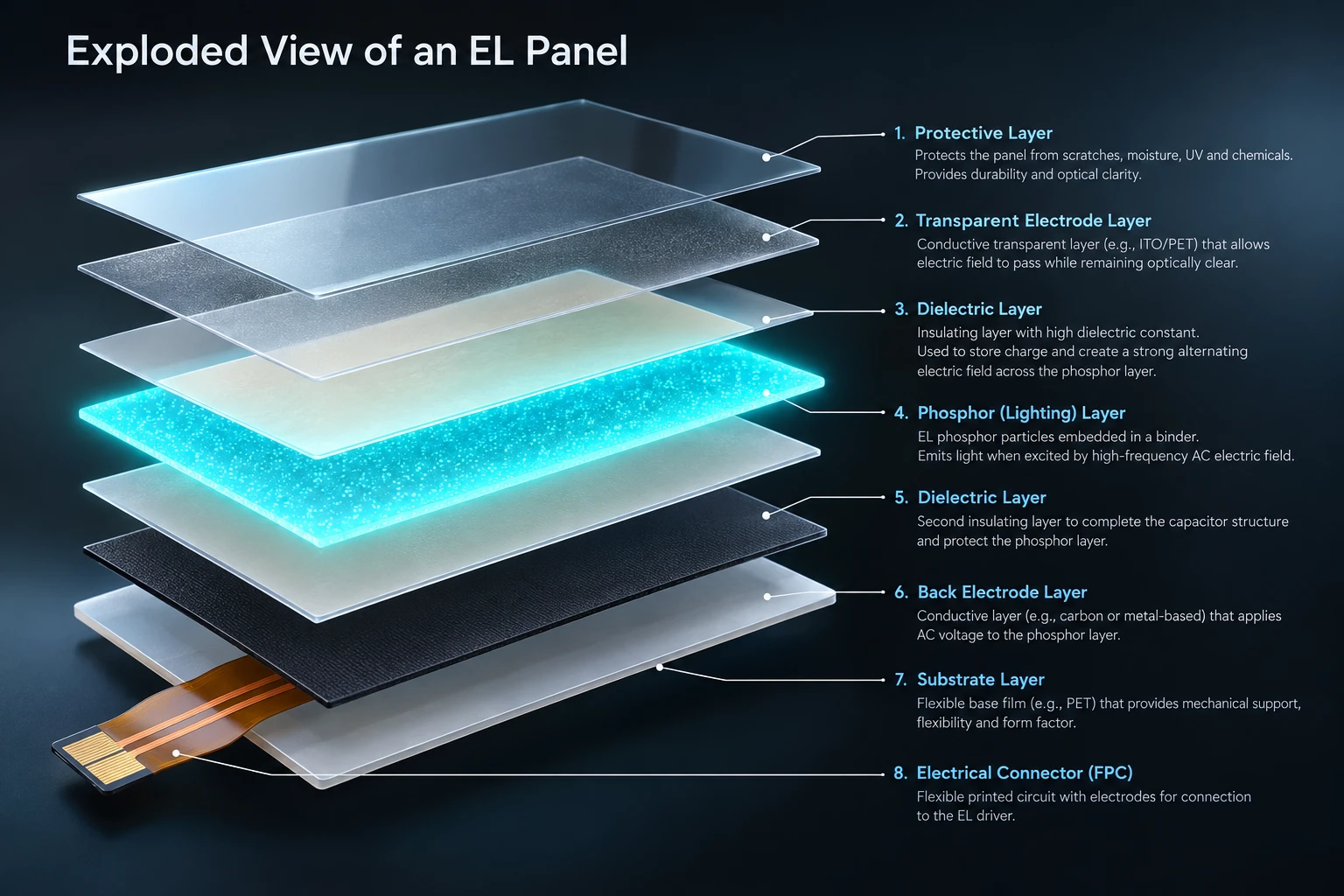
An EL panel is a sandwich. Phosphor particles sit in a thin layer between two electrodes, one of them transparent. When an alternating voltage is applied, a strong electric field builds up across the phosphor. Electrons inside the particles are accelerated by that field and collide with special “luminescence centres” created by the dopants. Those centres absorb the energy and release it as visible light.
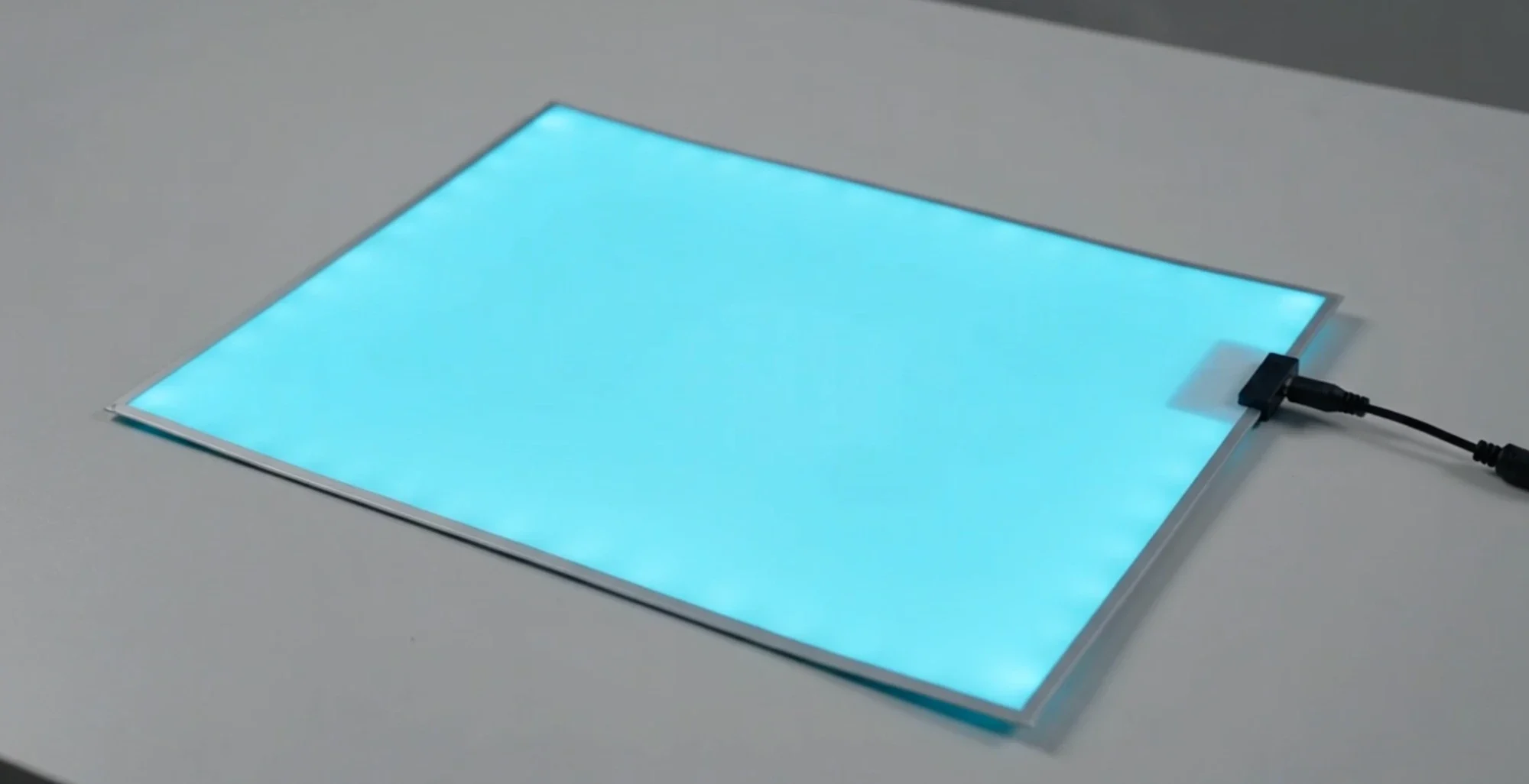
No filament. No glass. No heat to manage. Just a printed layer that glows evenly from edge to edge.
Why alternating current?
The light comes from the field changing direction again and again. That is why EL panels are driven by alternating current, usually supplied by a small driver, or inverter, that converts a battery or DC supply into the right voltage and frequency.
Two dials matter: voltage and frequency. Raise either and the panel glows brighter. Frequency can also nudge the colour. With many blue-green phosphors, higher frequencies shift the glow towards blue. Try it below.
This is an illustration. Real panels are tuned with their driver.
The result: cold, uniform light
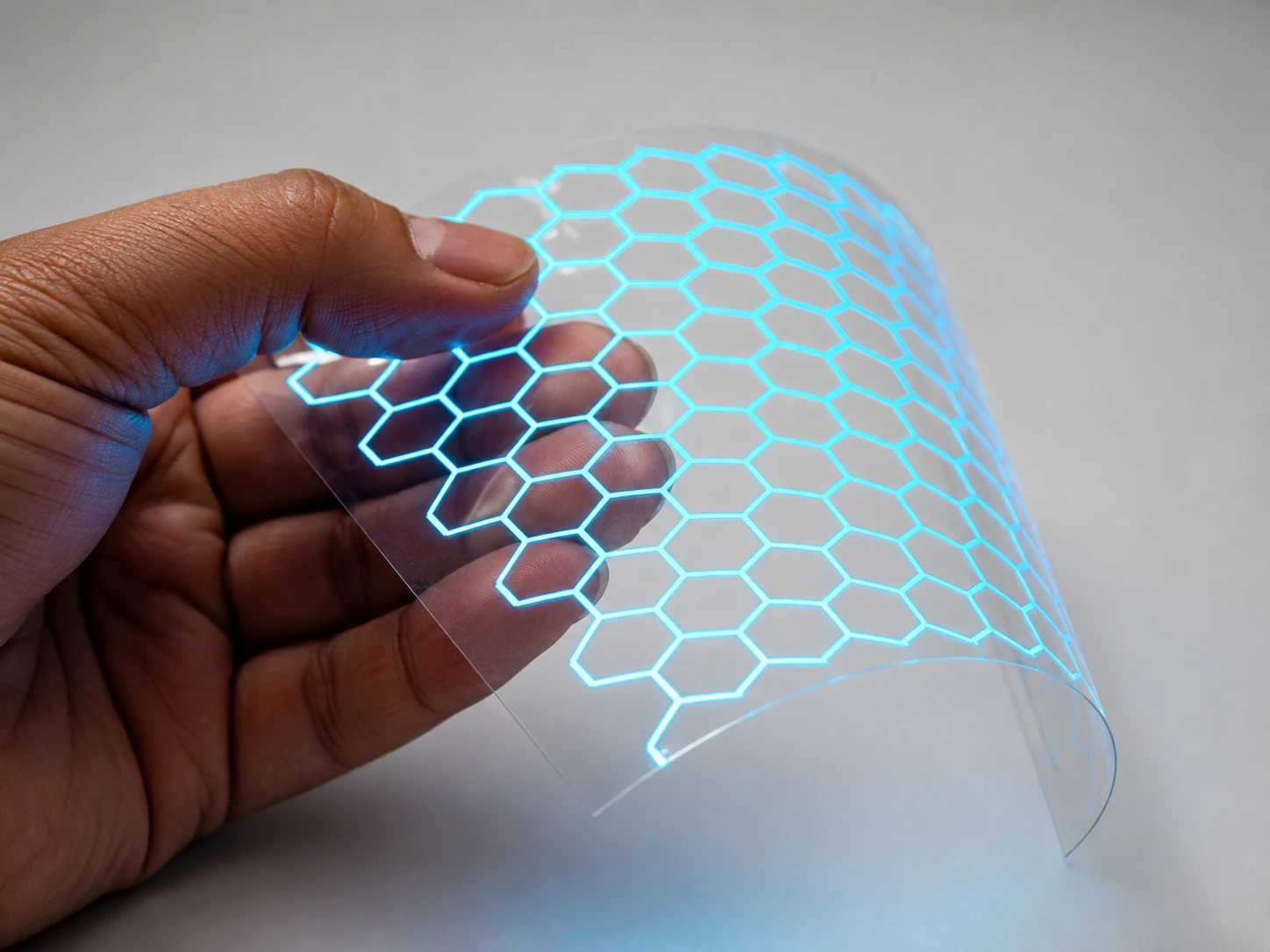
Because the whole phosphor layer lights up at once, EL produces a soft, uniform glow with no hot spots. And because almost none of the energy becomes heat, the surface stays cool to the touch. That’s why EL can live on skin, fabric, glass and inside tight spaces where other light cannot.