Every light source turns electrical energy into two things: light and heat. Old incandescent bulbs turned most of their energy into heat. LEDs are far better, but their tiny chips still need heat sinks to stay healthy at high power.
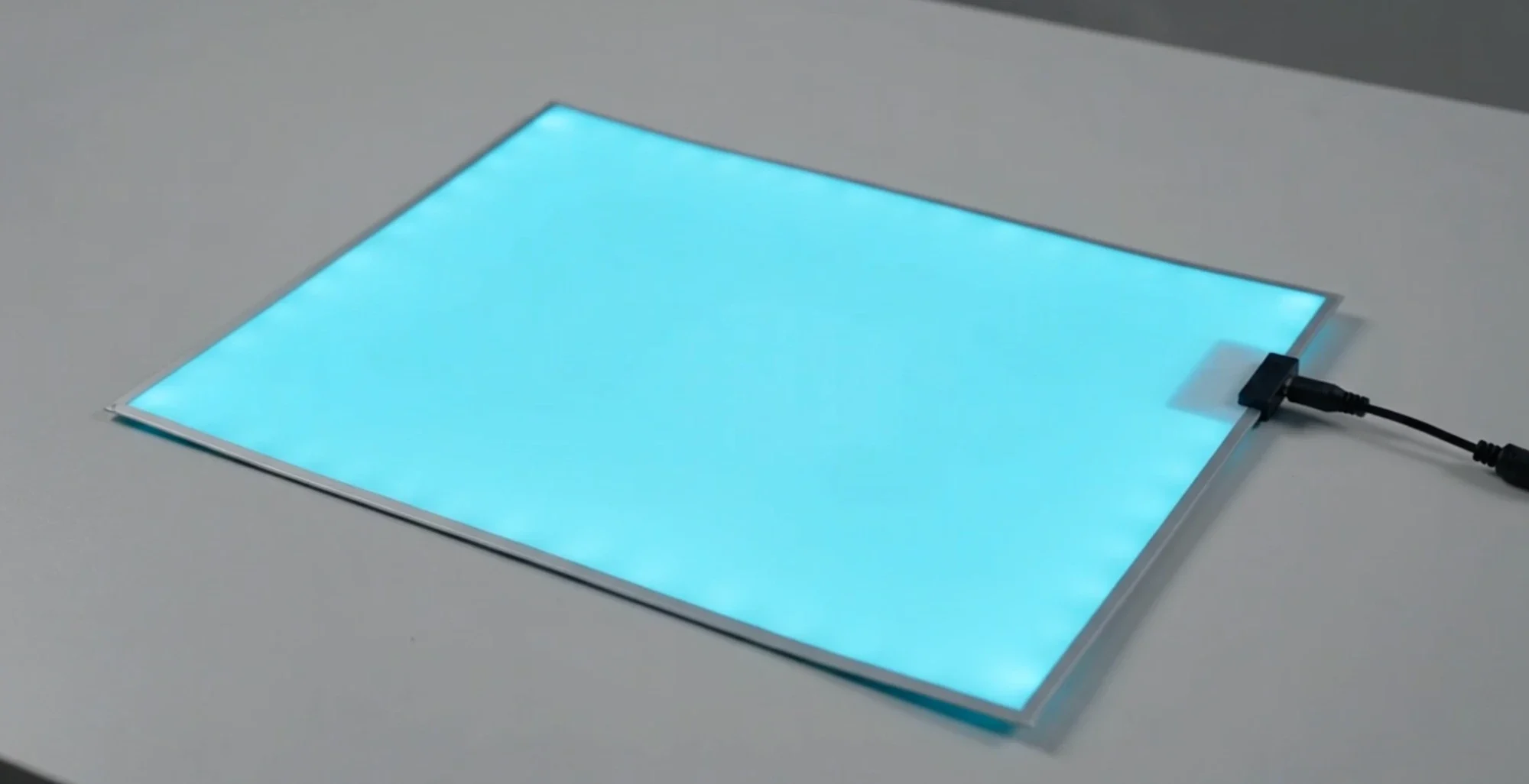
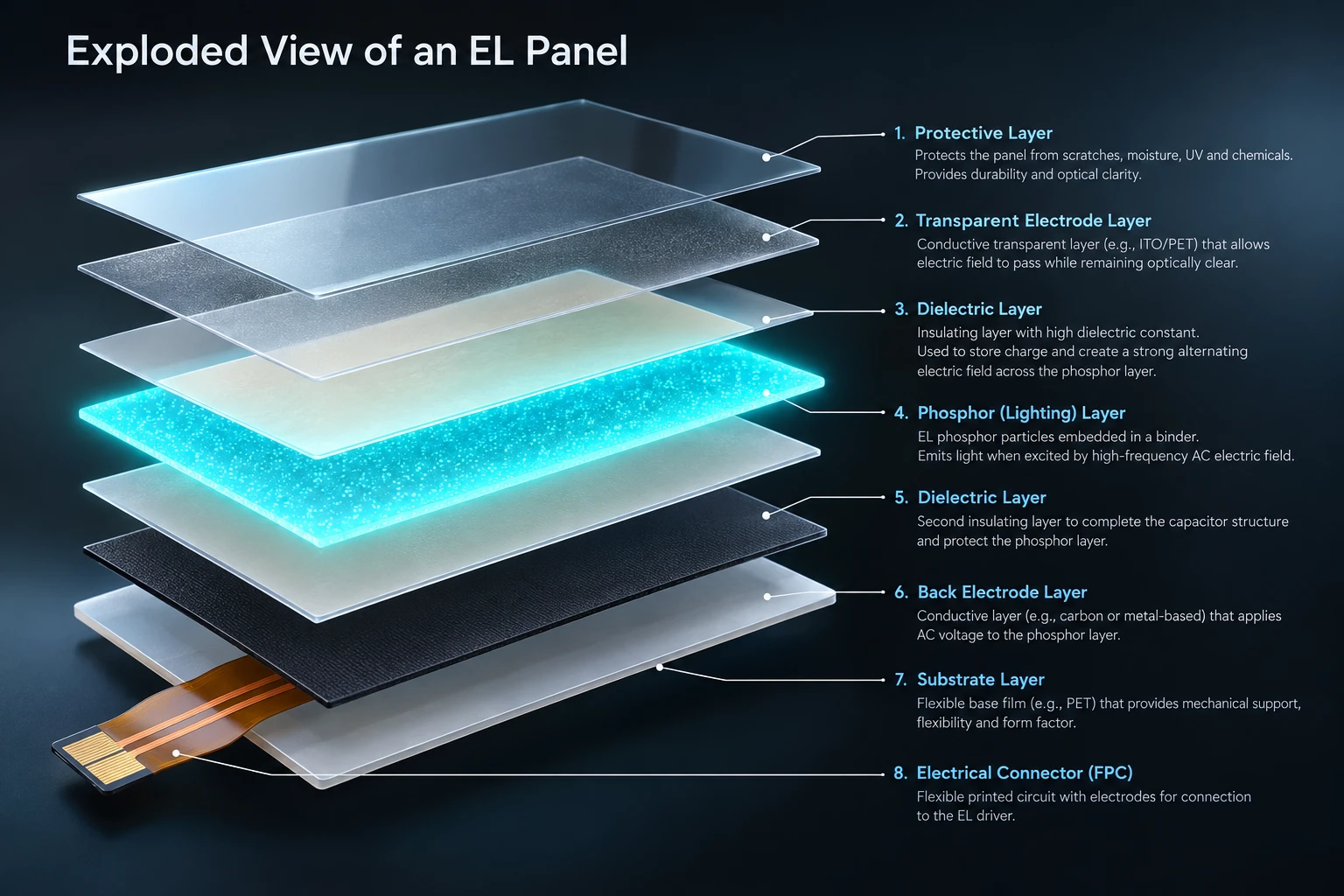
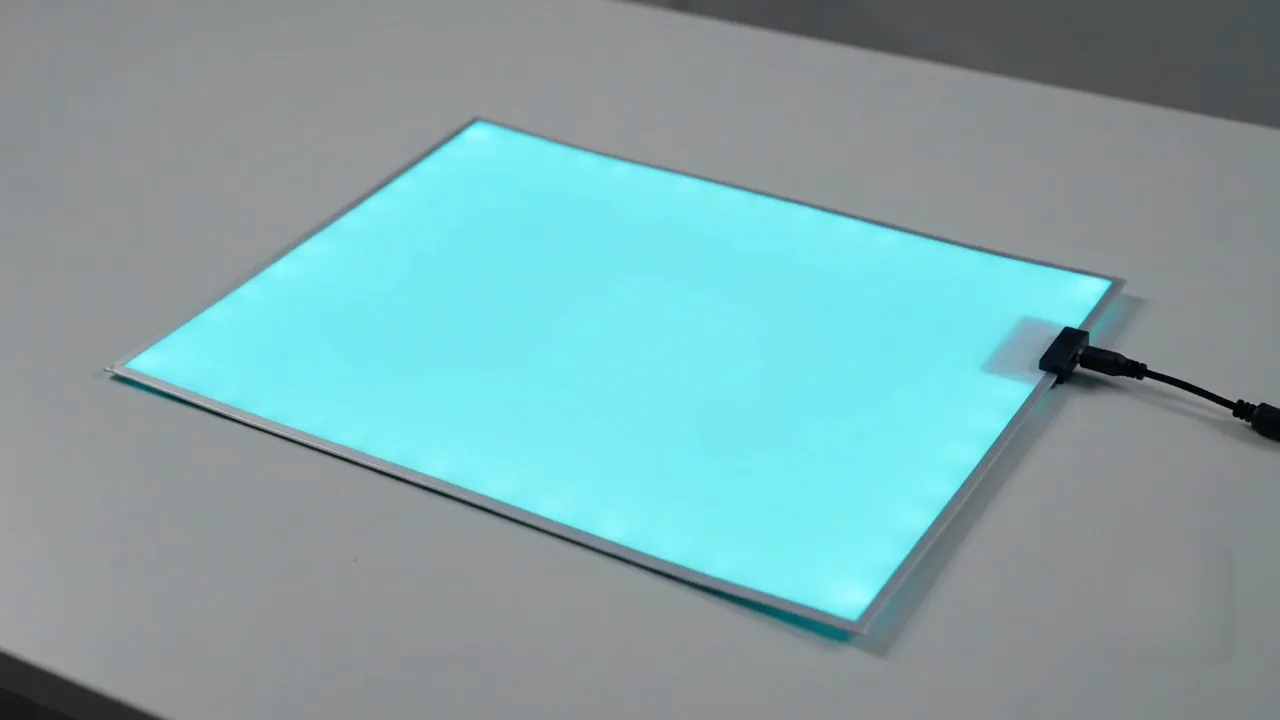
EL works differently. Its light comes from an electric field exciting phosphor particles, spread across the whole surface, so there is no single hot spot, and the panel stays close to room temperature.
Compare how different light sources feel to the touch below. (The bars are illustrative, not lab measurements.)
Cool
Hot
Hot to the touch. Most of its energy becomes heat.
Light is cool, but the chip runs warm and needs a heat sink.
Close to room temperature across the whole surface.
Illustrative comparison.
Why cold light opens doors
- On the body: fashion, wearables and bridal wear, where light touches skin.
- In tight spaces: car trims, laminated glass and control panels with no room for heat sinks.
- Near sensitive materials: fabrics, paper, plastics and displays that heat would damage.
- Where safety matters: no hot surfaces in public spaces or near children.
The coolest thing about EL light? It is cool.